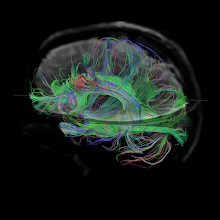
Wooo I have really been enjoying this whole "no blogging" thing...although in my defense, February was pretty much a dead zone for me...
Anyway, speaking of defense, here's some dazzle camouflage.
And now I'm going back undercover.
Showing posts with label Art. Show all posts
Sunday, March 27, 2011
Monday, December 27, 2010
Silks
Washed: aka watered silk or moire, fabric with a wavy appearance caused either by the warp and weft of the weave or by a treating process known as calendaring.
Chiffon: lightweight, sheer, somewhat puckered, stretchy and rough.
Taffeta: a smooth, stiff, crisp woven fabric known for its sheen and its drape.
Noil: aka raw silk, this is the leftover short fibers from after the spinning process.
Toile: painted or patterned cloth.
Crepe de chine: fabric with either an all-silk warp and weft or else with a silk warp and hard-spun worsted weft; yeah I don't know either.
Habutai: light and sheer with a plain weave, like taffeta but more Asian.
Twill: supple drape with a medium or heavy weight and a muted luster.
Organza: thin, sheer, plainly woven, with no sheen; very similar to taffeta.
Dupioni: shimmering, iridescent, woven from coarse silk fibers and often quite stiff, with a good drape and an ability to resist wrinkles but also hold a crease.
Charmeuse: lightweight and satiny, with a reflective front and a dull back due to the uneven weaving method.
Jacquard: intricately woven and variegated, usually quite geometric or with regular organic motifs.
Brocade: heavy, woven on a shuttle-loom, patterned and colored.
Chiffon: lightweight, sheer, somewhat puckered, stretchy and rough.
Taffeta: a smooth, stiff, crisp woven fabric known for its sheen and its drape.
Noil: aka raw silk, this is the leftover short fibers from after the spinning process.
Toile: painted or patterned cloth.
Crepe de chine: fabric with either an all-silk warp and weft or else with a silk warp and hard-spun worsted weft; yeah I don't know either.
Habutai: light and sheer with a plain weave, like taffeta but more Asian.
Twill: supple drape with a medium or heavy weight and a muted luster.
Organza: thin, sheer, plainly woven, with no sheen; very similar to taffeta.
Dupioni: shimmering, iridescent, woven from coarse silk fibers and often quite stiff, with a good drape and an ability to resist wrinkles but also hold a crease.
Charmeuse: lightweight and satiny, with a reflective front and a dull back due to the uneven weaving method.
Jacquard: intricately woven and variegated, usually quite geometric or with regular organic motifs.
Brocade: heavy, woven on a shuttle-loom, patterned and colored.
Tuesday, December 21, 2010
Several Speaking Portraits
Portrait of an Old Man
Filippino Lippi
Portrait of Anne of Cleves
Hans Holbein the Younger
Buffoon with a Lute
Frans Hals
Portrait of a Man in a Turban (self-portrait?)
Jan Van Eyck
Portrait Of A Woman
Robert Campin
Filippino Lippi
Portrait of Anne of Cleves
Hans Holbein the Younger
Buffoon with a Lute
Frans Hals
Portrait of a Man in a Turban (self-portrait?)
Jan Van Eyck
Portrait Of A Woman
Robert Campin
Monday, December 6, 2010
Thursday, December 2, 2010
Ruzicka
I've found a new illustrator that I quite enjoy...by the name of Ruzicka. Rudolph Ruzicka. Coincidence? You decide.
He worked primarily with woodblock engravings in the early twentieth century and depicted cityscapes and such of Chicago, New York, and Boston. I suppose this sneaks him in at the end of the Golden Age of Illustration?
Here's one that strikes a chord:
He worked primarily with woodblock engravings in the early twentieth century and depicted cityscapes and such of Chicago, New York, and Boston. I suppose this sneaks him in at the end of the Golden Age of Illustration?
Here's one that strikes a chord:
Wednesday, November 24, 2010
Like Sculptcha
Yet another from the Telegraph archives...
This time, a guy who carves obscenely tiny sculptures out of pencil lead. Okay graphite whatever...the point is, it's still in the pencil.
Thursday, November 18, 2010
Greenhorn
mid-15c., “young horned animal,” from green in sense of “new, fresh, recent” + horn. Applied to new soldiers from c.1650; extended to any inexperienced person by 1680s.
Well I am retracting my Christmas list and asking you all to pool together your resources and bid on - and win - this set of ten hilarious aquatint engravings by John Ferneley (1782-1860). Got it? Good.
I first saw them in Richmond, at the Virginia Fine Arts Museum, and I can't tell if that museum foolishly decided to sell them, or if there are multiple copies of them floating around, but whatever the story is on their current status, the story of their creation is well worth the 5k. Not to mention that the artwork and corresponding captions are worth a chuckle (or ten). Sadly only one photo was available to be purloined on that auction site and I don't think it can be enlarged so the caption can be read. Any artists out there with access to academic catalogs let me know if better images exist.
So. Count Sandor's Hunting Exploits in Leicestershire...that's the somewhat facetious name of the 1833 series of 'comic mishaps,' for each depicts the Hungarian nobleman in various stages of disaster, surrounded by - or immersed in, or dragged through - the countryside. There's more to it than a painter slyly mocking foreign aristocracy attempting an English pursuit, though...in fact, the complete opposite proves to be the case. I located a book that reveals something of the character of both Ferneley the artist and Sandor the aristocrat here (starting on page 125 and continuing through to 130), and apparently the count commissioned the works for himself, and brought them back to his homeland at the conclusion of his British holiday...the man clearly had a sense of humor, and was more than a little insane.
Count Sandor started his career as a reckless soul when, as a toddler, he allegedly bit a dog that had first bit him; he grew into adulthood refusing equestrian lessons from his tutor and instead declaring that, "the man who has to learn to ride will never be a horseman." It would seem that these words were the motto by which he lived; between hunting, steeplechase, and curricle racing, the count spent more days of his life with broken bones than without, and only slowed his pace "after he had been flung on his head on an iron railing" and had to spend well over a year in an asylum. Although he wasn't actually killed by this accident, when he did eventually pass away, his funeral was characteristic of his life - twice the horses leading the hearse bolted and carried his body back to the stables.
Well I am retracting my Christmas list and asking you all to pool together your resources and bid on - and win - this set of ten hilarious aquatint engravings by John Ferneley (1782-1860). Got it? Good.
I first saw them in Richmond, at the Virginia Fine Arts Museum, and I can't tell if that museum foolishly decided to sell them, or if there are multiple copies of them floating around, but whatever the story is on their current status, the story of their creation is well worth the 5k. Not to mention that the artwork and corresponding captions are worth a chuckle (or ten). Sadly only one photo was available to be purloined on that auction site and I don't think it can be enlarged so the caption can be read. Any artists out there with access to academic catalogs let me know if better images exist.
So. Count Sandor's Hunting Exploits in Leicestershire...that's the somewhat facetious name of the 1833 series of 'comic mishaps,' for each depicts the Hungarian nobleman in various stages of disaster, surrounded by - or immersed in, or dragged through - the countryside. There's more to it than a painter slyly mocking foreign aristocracy attempting an English pursuit, though...in fact, the complete opposite proves to be the case. I located a book that reveals something of the character of both Ferneley the artist and Sandor the aristocrat here (starting on page 125 and continuing through to 130), and apparently the count commissioned the works for himself, and brought them back to his homeland at the conclusion of his British holiday...the man clearly had a sense of humor, and was more than a little insane.
Count Sandor started his career as a reckless soul when, as a toddler, he allegedly bit a dog that had first bit him; he grew into adulthood refusing equestrian lessons from his tutor and instead declaring that, "the man who has to learn to ride will never be a horseman." It would seem that these words were the motto by which he lived; between hunting, steeplechase, and curricle racing, the count spent more days of his life with broken bones than without, and only slowed his pace "after he had been flung on his head on an iron railing" and had to spend well over a year in an asylum. Although he wasn't actually killed by this accident, when he did eventually pass away, his funeral was characteristic of his life - twice the horses leading the hearse bolted and carried his body back to the stables.
Monday, August 23, 2010
Scrollwork
(I hate that I never write down where these images come from...If by some chance you know, let me know.)
It's getting to be that time when a person is on the lookout for every possible way of making a cheap apartment look less...flat...without having to spend any money. Although I'm not sure the supervisor will allow stenciling. And actually...first thing I have to do is simply find an affordable apartment, flat or otherwise.
Wednesday, July 28, 2010
Friday, July 9, 2010
Tuesday, June 29, 2010
Statuesque
Below are some of my favorite three-dimensional portraits. I'm hardly an expert at art, much less sculpture, but these ones for some reason strike me. I believe there's quite a variety - from the whimsically precocious to the raunchily morbid - but I don't think I'll add any further comments at the moment. I'm not even sure that I could explain these guys in any lucid way. Just scroll down and enjoy. And if you ever have the chance, definitely go see them in person...it adds a whole other dimension.
Bust of a Child, Possibly Henry (Guido Mazzoni)
Monday, June 28, 2010
Thursday, June 24, 2010
More Comics
The only thing that saves the comic strip Garfield from being worse than the comic strip The Family Circus is the redeeming qualities of the self-explanatory Garfield minus Garfield. Click to reveal Jon Arbuckle's existential angst.
Saturday, June 12, 2010
Wednesday, June 9, 2010
Friday, June 4, 2010
Monday, May 24, 2010
Saturday, May 15, 2010
Wednesday, May 12, 2010
Good Old Fashioned Fun
I've just located 170 pages of zany comic-book images from the 50s and 60s and may never be productive again.
Friday, May 7, 2010
Architecture "Cymraeg"
[Photo from the BBC.]
Yes, it's the Senedd! That's Welsh, and it's pronounced sɛnɛð...oh yeah, I broke out the IPA. It's also known as the National Assembly Building, and is essentially the Welsh parliament - I gather there have been some efforts for decentralization or devolution or what-have-you in British government, and so this is where it all happens for Wales.
It's quite an impressive building, intending to bring together nationalistic history and cosmopolitan technology...I was pretty intimidated when I went there, although that may have been less because of the acoustic panels and computer screens and more because everyone tried speaking Welsh at me. All I know how to say back to them would have been cariad, the one word I picked out of a song by the Welsh band Gorky's Zygotic Mynci, which means something along the lines of 'beloved'. Yeah. I'm not quite comfortable with projecting pseudogaelic hippie vibes to government people?
Inside, you can see this nifty structural device...the brochures I read at the time said it was supposed to represent a tree trunk, but it kind of looks like a smokestack? (Orrr a mushroom cloud???). And underneath that is a skylight that illuminates the debate chamber. Anyway, since its opening in 2006, the Senedd has won several awards for aesthetics as well as environmentalness...it's made from local materials, gets heated geothermally, and! the toilets flush with rainwater collected from the roof.
Oh, and I nearly forgot...the thing is located on Cardiff Bay, where several key Dr Who moments have occurred. And it's not too far from the Dr Who museum. So you can just go ahead and scooch this one to the top of your tourist list, eh?
Subscribe to:
Posts (Atom)


.jpg)